A busy dock can still lose money. Book a shipment against the wrong purchase order and the putaway buries the mistake; the picker then shorts an order or sends the wrong lot. Receiving, putaway and picking are the three linked processes at the centre of warehouse management basics. Get those right, with a system that records the truth and a traffic plan that Safe Work Australia would recognise, and the rest of the operation has something solid to stand on.
Quick answer
Inbound stock stays unconfirmed until it has been counted, checked and booked to a location the system can see. Picks should then come from that system, not from memory. The table below is the spine of a simple operation, whether the site is yours or a third-party warehouse.
| Stage | Purpose | Done well | Done badly |
|---|---|---|---|
| Receiving | Prove what arrived, in what condition, against the order | Count, inspect, record lots or expiry, log exceptions | "It looks about right" and a signature on the driver's copy |
| Putaway | Store it so it can be found and retrieved safely | System-directed location by size, velocity, lot or temperature | First empty bay, with no scan |
| Picking | Fill the order from the right location | Directed pick list or RF task, scan of item and bay, check count | Walking the aisle with a printed invoice and a hopeful eye |
How receiving should work
The receive starts before the truck arrives. A purchase order or advanced shipping notice (ASN), a booked dock time, and enough people and equipment on the door should already be in place. A container or tautliner that turns up unannounced gets counted under pressure, which is how short-ships get signed away.
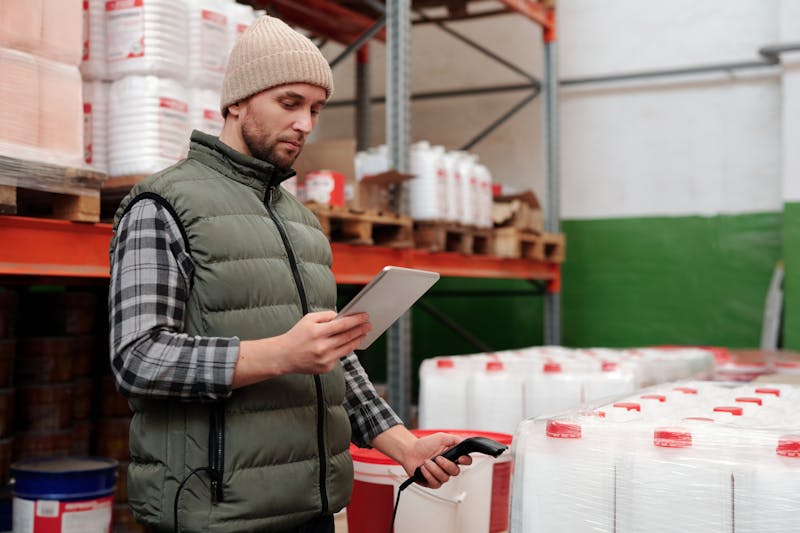
On the dock, unload into a staging area, not straight into the racks. Check the seal or load restraint if that is part of your process, then count against the paperwork. For cartons, that may be a carton count plus a sample inner count. For pallets, confirm the pallet count, the label, and whether the stack is stable enough to store. Record batch, lot, serial or expiry data if the product needs it, and photograph damage before the driver leaves.
Exceptions need a written path: short, over, damaged, wrong SKU, or paperwork that does not match the load. The default should be to hold the stock in a quarantine location until purchasing or quality says otherwise. Booking a short delivery as complete, then hoping the supplier will sort it out later, is how your available-to-sell figure quietly lies to the sales team.
Food, pharmaceutical and some imported goods add compliance steps at this point. A site that holds HACCP certification or is a quarantine approved premise (QAP) will have extra checks, temperature records or documentation that have to be completed before putaway. If that is your product, do not choose a warehouse that treats every inbound as a generic pallet.
Putaway is a decision, not a walk to a gap
Once accepted, the stock has to live somewhere the next picker can find. Putaway rules usually consider some mix of:
- Size and weight, so a heavy pallet is not stored in a location the equipment cannot reach safely
- Velocity, so fast movers sit in lower, closer bays (often called an ABC or fast-slow split)
- Lot, batch or expiry, so first-expiry, first-out can actually be followed
- Temperature, hazardous goods or high-value security zones
- Cube, so a half-empty pallet does not waste a full deep slot if a better fit exists
A warehouse management system should suggest the location and require a scan when the pallet or carton is dropped. Without that scan, your system still thinks the goods are on the dock, and the next count will be a surprise. Directed putaway also stops the very human habit of building unofficial "hot slots" at the end of an aisle, which wreck FIFO and make stocktakes miserable.
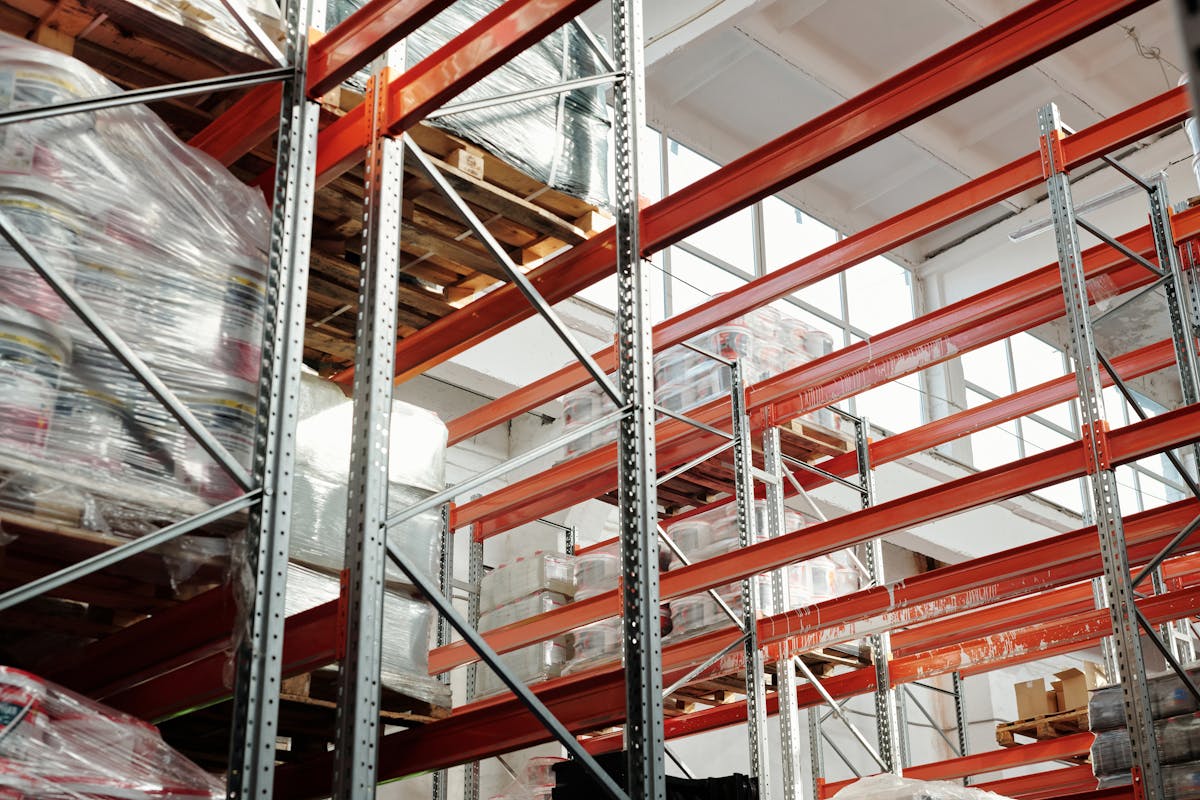
Racking itself is part of the decision. High-bay and double-deep racking, the kind used in larger Australian 3PL sites, hold more but demand disciplined location control, because a pallet buried behind another one is not really available. Ground-floor bulk is faster to put away and slower to pick accurately if loose cartons start to mingle.
Which picking method should you use?
Picking is where labour and error costs show up on the invoice. The method should follow the order profile, not the other way around.
| Method | How it works | Best fit | Watch-out |
|---|---|---|---|
| Discrete (single order) | One picker completes one order | Low volume, large or complex orders, or very high-value items | Slow once order lines explode |
| Batch | Several orders picked together, then sorted | Many small orders that share SKUs | Needs a sort step; a missorted item becomes someone else's wrong delivery |
| Zone | Pickers stay in a zone and orders move, or are consolidated, between zones | Wide SKU range spread across a large building | Handoffs need a system, or lines get dropped between zones |
| Wave | Groups of orders released together, often by departure time, carrier or route | Operations tied to cut-offs and outbound trucks | A late wave can miss a cut-off even if the stock was there |
Whatever the method, confirmation is the accuracy tool. A barcode or RF scan of the location and the item, plus a quantity entry, beats a tick on a paper list. Catch the error in the aisle, not at the customer's dock. For lot-controlled stock, the system should tell the picker which lot to take. If people are allowed to "just grab the closer one," expiry control is a poster, not a process.
Packing and despatch sit after the pick, but they belong in the same design. A check at pack, a photo of the carton, a licence-plate or consignment label, and an electronic proof of delivery give you a trail when a customer says a line was missing. General Carrying's published pick and pack services are built around that outbound work for B2B and B2C, including same-day packing on urgent jobs, which only works if receiving and putaway were already clean.

Safety is part of the process, not a poster
Moving plant sits around receiving, putaway and picking. Safe Work Australia's traffic management guide for warehousing starts with a simple order: separate pedestrians from forklifts wherever you can. Where you cannot, use barriers, exclusion zones, speed limits, warning devices, high-visibility clothing and a documented traffic plan. A receiving dock with no marked walkway is not a "busy warehouse." It is an unmanaged risk.
Manual handling sits beside the traffic problem. Safe Work Australia treats lifting, pushing and pulling that are repetitive, forceful, awkward or exposed to vibration as hazardous manual tasks. Mechanical aids, sensible pallet heights, and job rotation reduce the strain that shows up as back and shoulder injuries on pick lines. WorkSafe Victoria also publishes warehousing injury hotspot material that is worth reading if you are designing a pick face from scratch.
Racking inspections, load-signage, and a rule that damaged uprights are reported immediately belong in the same pack. A clever putaway rule is worthless if the bay itself is unsafe.
A worked example: one receiving error, three costs
The cost stack below is an example, not a claim about any one site. A Melbourne warehouse receives 40 cartons of a single SKU against a purchase order for 42. The checker is under time pressure, signs for 42, and the system putaway task is created for 42. Two weeks later a picker is sent for the last four cartons of a customer order. Only two are in the bay. The warehouse buys two cartons at short notice, air-bags a back order, and spends a supervisor's afternoon on a recount.
A conservative cost stack for that one event might be:
- The original short-ship, if the supplier is no longer willing to accept a late claim: the landed cost of two cartons
- Labour: recount, customer service, and a second pick and pack
- Freight: an extra despatch to the customer
- The hidden cost: sales people stop trusting the stock figure and start padding orders
None of those lines required a new forklift or a new building. They required a count at the dock, an exception location for the two missing cartons, and a system that would not let 42 be booked when 40 were scanned. The same logic applies in reverse when 44 arrive and the extra two vanish into a "we'll sort it later" pile.
When a 3PL is the cleaner option
Running this well takes space, labour, equipment, a system, and compliance. Many growing importers and brands reach a point where a national warehousing 3PL is cheaper than stretching a suburban unit. General Carrying, which has operated since 1995, publishes storage capacity of more than 35,000 pallets, national sites in Sydney, Melbourne, Brisbane, Perth and Adelaide, same-day unpacking, a customer-facing WMS with electronic PODs and stock reports, HACCP certification and quarantine-approved premises.
Those features only help if you still write a clear inbound and outbound process: cut-off times, ASN format, lot rules, pick units (each, inner, carton, pallet), and who pays for storage when stock goes slow. A 3PL does not remove the need for warehouse management basics. It applies them at a site you do not own.
A troubleshooting table for the floor
| Problem | Likely cause | Fix |
|---|---|---|
| Stock figure never matches the count | Receivals booked from paperwork, not from a count, or putaway not scanned | Hold dock stock in a staging location until the scan is done |
| Pickers cannot find fast movers | Putaway ignored velocity, or unofficial floor locations | Reset ABC locations and ban informal slots |
| Wrong lot sent to a customer | System allowed any lot, or the picker overrode it | Force lot allocation at pick confirmation |
| Orders miss the carrier cut-off | Waves released too late, or receiving still occupying the dock in the afternoon | Set inbound hours and wave times, and stick to them |
| Damage in the racks | Overhanging pallets, poor wrap, or damaged uprights left in service | Check wrap at putaway, inspect racking, and quarantine unsafe bays |
| Near misses with forklifts | Shared aisles with no hierarchy or barriers | Redesign traffic flow against the Safe Work Australia warehousing guide |
How do you know the process is working?
A consulting report is not required. A short weekly pack will do: units received versus units booked, putaway tasks still open at close of day, pick accuracy (lines with an error divided by lines picked), orders that missed the cut-off, and inventory adjustments. If receiving exceptions are not recorded as exceptions, the accuracy figure is fiction.
Cycle counts belong in the same pack. Counting a fast-moving location every week, and a slow one every quarter, finds a failing process earlier than an annual stocktake. When a count fails, the first question is not "who stole it?" It is "was it received, put away and picked with a scan?" Most unexplained gaps in a small warehouse are process gaps.
Cut-off times deserve the same honesty. If sales can drop an order into the system at 4.30 pm and still expect same-day pick, the dock will still be blocked at 5 pm and the traffic plan will be ignored. Publish inbound and outbound cut-offs, and hold both the warehouse and the sales team to them.
Putting it together
A verified receive, a directed putaway and a confirmed pick are the three things to build the warehouse around. Put the first money into the dock process and the scan discipline, then choose a picking method that matches the orders, and design the traffic so people and forklifts are not improvising. If that is more than the site can support, pay a 3PL that already runs those steps, and still write the rules down.
Sources
- Safe Work Australia, "Traffic management: Guide for warehousing", accessed 18 November 2026, https://www.safeworkaustralia.gov.au/sites/default/files/2021-04/Traffic%20management%20guide%20for%20warehousing.PDF
- Safe Work Australia, "Workplace traffic management guidance material", accessed 18 November 2026, https://www.safeworkaustralia.gov.au/doc/workplace-traffic-management-guidance-material
- Safe Work Australia, "Lifting, pushing and pulling (manual tasks)", accessed 18 November 2026, https://www.safeworkaustralia.gov.au/safety-topic/hazards/lifting-pushing-and-pulling-manual-tasks
- WorkSafe Victoria, "Injury hotspots - Warehousing and storage", accessed 18 November 2026, https://www.worksafe.vic.gov.au/injury-hotspots-warehousing-and-storage
- Dawson Consulting, "7 Key Warehouse Processes", accessed 18 November 2026, https://www.dawsonconsulting.com.au/spotlight-on-7-key-warehouse-processes/
- General Carrying, "National Warehousing 3PL", accessed 18 November 2026
- General Carrying, "Pick and Pack", accessed 18 November 2026
FAQ
What is the difference between receiving, putaway and picking?
Receiving is the process of accepting goods against a purchase order or advanced shipping notice, checking quantity and condition, and recording them. Putaway is moving those goods to a storage location under a rule the system can find later. Picking is selecting goods to fill an order and confirming that the right item left the right location.
Do I need a warehouse management system?
A spreadsheet can limp through a very small, slow-moving store. Once you have multiple locations, lot or expiry control, more than a handful of pickers, or customers who expect accurate stock figures, a WMS (or a capable 3PL system) pays for itself by directing putaway and picks and by leaving an audit trail.
What is the most accurate picking method?
Accuracy comes less from the method's name than from confirmation at the location: a scan of the product and the bay, plus a count. Discrete (order-by-order) picking is simple and often accurate at low volume. Batch, zone and wave picking are faster at scale, but only if the system prevents a picker from taking the neighbouring SKU.
Who is responsible for warehouse safety in Australia?
The business that controls the workplace has duties under work health and safety law to manage risks so far as is reasonably practicable. That includes forklift and pedestrian traffic, racking, and hazardous manual tasks. Safe Work Australia publishes traffic management guidance for warehousing, and state regulators enforce the rules.
When should a business use a 3PL warehouse instead of its own?
When storage, labour, equipment or compliance (for example HACCP or quarantine) would cost more to build yourself than to buy as a service, or when you need capacity in more than one city. Look for a site with a live WMS, clear receiving cut-offs, and pick and pack processes that match your order profile.
About VLD Business Desk
VLD Business Desk is the VLD editorial byline for business and small business writers. Articles are researched from official and primary sources, which are listed at the end of each piece.