The shopfront window is still one of the most visible pieces of marketing a real estate agency owns. It works around the clock, reaches people who aren't scrolling property portals, and tells locals the agency is active in their street. A good real estate window display can bring in buyers and, just as importantly, sellers who walk past and decide which agent to call.
But the window is also advertising, which means the same pricing laws that apply to online listings apply to every card on the glass.
What a window display needs to do. Before you plan the layout, be clear on its jobs.
A real estate window has four main jobs:
- Show the agency is active. A full window of current listings signals that the business sells in the area.
- Attract buyers. Passers-by should be able to spot a property that interests them and find out more quickly.
- Win listings. Sellers judge agents partly by their marketing. A sharp, well-maintained window suggests their home will be presented well.
- Reflect the brand. Consistent colours, fonts and layout make the agency recognisable.
Keep those goals in mind when deciding what goes in the window and how it is arranged.
Layout: less is usually more
It's tempting to fill every centimetre of glass with listings. In practice, a crowded window is harder to read from the footpath and looks less premium.
A few layout principles:
- Work in a grid. Consistent card sizes and spacing look professional and make it easy to swap listings.
- Feature a hero listing. A larger card or screen in the centre or at eye level for a standout property draws people closer.
- Keep cards at readable heights. The most important information should sit between about waist and head height for someone standing on the footpath.
- Group logically. Some agencies group by sale and rent, or by price band, so people can find what's relevant to them.
- Leave some glass clear. A little open space lets people see into the office, which feels welcoming.
Writing listing cards that sell
A window card has a few seconds to get attention. Each card should include:
- One strong photo. Usually the best front or living shot, large and sharp. Avoid cramming several small photos onto one card.
- A short headline. The suburb and a single key feature, such as "Family home near the station".
- Core facts. Bedrooms, bathrooms, car spaces and land size, often as icons.
- The price or method of sale. Expressed in a way that complies with your state's rules.
- How to find out more. A QR code to the online listing, the agent's name and phone number, and inspection times.
Keep fonts large enough to read from a step or two back from the glass. Print on good stock with consistent templates. Faded, curling or sun-bleached cards undo the whole effect, so replace them as soon as they show wear.
Display systems compared
| Display type | How it works | Strengths | Things to weigh |
|---|---|---|---|
| Printed cards on stands or adhesive | Cards fixed to glass or freestanding holders | Low cost, simple | Fades in sun, looks dated if not maintained |
| Cable suspension systems | Acrylic pockets hung from tensioned cables | Flexible layout, clean look, easy to swap cards | Unlit versions fade into the window at night |
| LED light boxes on cables | Thin illuminated panels holding printed cards | Bright, sharp photos day and night | Power use, upfront cost |
| Digital screens | Screens running listing slideshows or video | Change content instantly, show more listings | Higher cost, glare, needs content management |
| Freestanding window stands | Floor-standing frames behind the glass | Good for smaller windows or rentals | Takes floor space |
Many agencies combine options, such as LED light boxes for sale listings and a digital screen for recent sales and rentals.
Lighting the window after hours
Plenty of people walk or drive past agencies in the evening, after work or on weekends. An unlit window goes dark just when many of them are looking.
Illuminated systems solve that. LED light boxes backlight each card so photos look bright and crisp, and they're far more visible at night than printed cards lit by ceiling lights. Digital screens are naturally visible after dark too. Put lighting on a timer to control power use, and check local rules on light spill if you're near homes.
Australian suppliers offer cable-mounted LED systems designed for agency windows. Display Me, for example, sells real estate cable light boxes in different sizes, which lets agencies mix landscape and portrait cards in one window.
What are the pricing rules for window cards?
Every price on a window card is advertising. The rules differ between states, and the strictest regimes are in Victoria and NSW.
| Rule | Victoria | NSW |
|---|---|---|
| Advertised price can't be below | The agent's estimated selling price, the seller's asking price, or a rejected written offer | The agent's estimated selling price recorded in the agency agreement |
| Price ranges | Single figure or range of up to 10% | Range up to 10% |
| Qualifying words | Can't use words or symbols such as "offers above", "from" or "+" | Must not mislead about the likely price |
| Price statement | Property Price Statement must be included on any physical advertisement via a QR code or link | Not applicable |
Victoria's new price transparency rules. Consumer Affairs Victoria says the Property Price Statement, which replaced the Statement of Information, must be displayed at open inspections, shown next to the price on the main online listing, and included on any physical advertisement through a QR code or a link. It must be updated if the indicative selling price changes. That means every window card for a Victorian residential sale should carry a working QR code or link to the current statement.
Keep cards in sync. If the estimated selling price rises, the online listing and the window card must change together. A stale card showing an old, lower price could be underquoting.
Other states. Pricing rules for property advertising differ elsewhere. Queensland, for example, has its own rules about how prices can be shown for properties going to auction, and every state's real estate regulator publishes advertising guidance. Check the current rules with your state regulator, and see Consumer Affairs Victoria's guide for buyers for how the Victorian rules look from the other side of the counter.
Penalties are significant. Consumer Affairs Victoria warns that agents who breach underquoting laws risk penalties of more than $50,000, and may lose their commission for the most serious breaches.

Should you switch to digital screens?
Digital screens have become common in agency windows, and they suit some offices better than others.
Where they work well:
- High-traffic strips where many people pass each day
- Agencies with lots of listings, where a slideshow can show more properties than printed cards
- Offices that want to show video walk-throughs, recent sales or agent profiles
- Teams that update listings often and want changes to appear instantly
Where they're less suited:
- Windows in strong direct sun, where glare can wash out the picture unless the screen is high-brightness
- Small offices with few listings, where a slideshow repeats too quickly
- Teams without anyone to manage the content, since an out-of-date screen is worse than an old card
A common approach is a mix: illuminated panels for current sale listings, which people can read at their own pace, and one screen for video, rentals or recent results. Whatever you choose, the same pricing rules apply to screens as to printed cards.
Rental listings in the window
Rentals move quickly, so many agencies give them less window space or show them on a screen rather than printed cards. If you do display rentals:
- show the weekly rent clearly and accurately
- include the available date and key features
- remove leased properties the same day
- add a QR code to the online listing and application process
Rental displays also help win landlords. A visible, well-kept rental section tells property investors the agency actively manages properties in the area.
The Australian Consumer Law still applies
Even outside Victoria and NSW, and for commercial or rural property where state underquoting laws may not apply, the Australian Consumer Law bans false or misleading representations. The ACCC's guidance on false or misleading claims applies to window displays as much as to online ads.
In practice:
- Photos should fairly show the property. Heavy editing that hides defects, or virtual staging that isn't disclosed, can mislead.
- Descriptions like "walk to the beach" or "renovated" should be accurate.
- Land sizes and features must be correct.
- "Sold" stickers should only go on properties that have actually sold.
Can you put signs on the footpath?
Open home flags, A-frames and footpath displays outside the office help, but the footpath is controlled by councils. Many councils regulate what can be placed on the footway, set minimum clear paths for pedestrians and require permits. The City of Sydney's footway display policy, for example, sets out clear paths of travel and distances from street furniture.
Signs attached to the building, such as illuminated fascia signs, projecting signs or large window graphics, may need planning approval depending on size and location. Check with your council before investing in new signage.
Inside the office
The display doesn't stop at the glass. Once a buyer or seller walks in, the office should continue the impression the window created.
- Reception. Keep it uncluttered, with current brochures in neat holders.
- Recent sales wall. Results build trust with sellers. A board or screen showing recent sales, with permission from vendors where needed, can help.
- Brochure stands. Freestanding or wall-mounted stands keep property brochures and agency information organised.
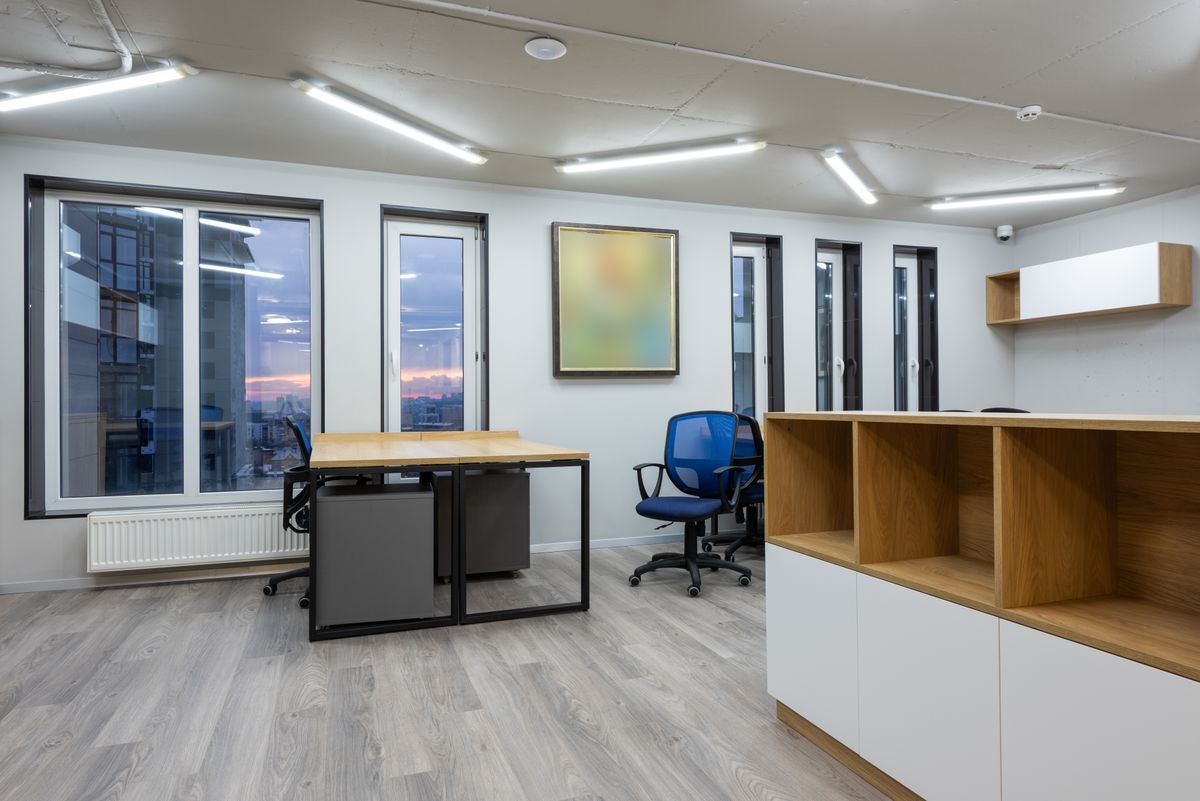
- Meeting rooms. A tidy space with a screen for showing listings or appraisal data helps with listing presentations.
- Accessibility. Make sure the entry and reception are easy to reach and that signage is readable.
Keeping the display current
A neglected window does more harm than an empty one. Build a routine:
- Update the same day a property sells, goes under contract or is withdrawn.
- Check prices weekly against online listings and the latest estimated selling price.
- Test QR codes to make sure they link to the right listing and, in Victoria, the current Property Price Statement.
- Clean the glass and displays regularly, inside and out.
- Replace faded cards and dead globes promptly.
- Refresh the layout every few months so locals keep looking.
Assign one person to own the window. When it's everyone's job, it tends to be no one's.
Measuring whether it works.
It's hard to track window traffic precisely, but there are useful signals:
- Use a unique QR code or short link on window cards, so you can count scans separately from other marketing.
- Ask walk-in enquiries and new vendors how they heard about the agency.
- Compare enquiry levels before and after a display upgrade, such as moving to illuminated panels.
These numbers help justify spending on display hardware and show which kinds of listings draw the most interest.
Next steps
A strong real estate window display is clear, bright and current. Use a consistent grid, feature a hero listing, keep cards readable from the footpath and light the window so it works after hours. Treat every price on the glass as an advertisement: follow your state's underquoting rules, keep window and online prices in sync, and in Victoria add a QR code or link to the Property Price Statement. Check council rules before adding footpath or illuminated signs, and give one person responsibility for keeping the display fresh.
Sources
- Consumer Affairs Victoria: Underquoting information for real estate agents
- Consumer Affairs Victoria: Understanding property prices and underquoting for buyers
- NSW Government: Underquoting guidance for property professionals
- ACCC: False or misleading claims
- ACCC: Price displays
- City of Sydney: Display of goods on the footway local approvals policy
FAQ
What makes a good real estate window display?
A clear layout with a small number of strong listings, large high-quality photos, short readable text, consistent branding, good lighting and accurate, current prices. Remove sold or withdrawn listings promptly.
Do window cards need to follow underquoting laws?
Yes. A window card is an advertisement, so in Victoria and NSW the advertised price can't be lower than the agent's estimated selling price, and any range can't be wider than 10%. The Australian Consumer Law also applies in every state.
Does a window card in Victoria need a QR code?
Consumer Affairs Victoria says the Property Price Statement must be included on any physical advertisement via a QR code or a link to a website.
Are LED light boxes worth it for a real estate office?
Many agencies find illuminated displays keep the window visible at night and make photos look sharper. Weigh the cost of the units and power against how much foot and car traffic passes your office after dark.
Do I need council approval for an illuminated sign?
It depends on the size, location and type of sign. Some small signs are exempt, while illuminated, projecting or large signs often need approval. Check with your local council.
About VLD Business Desk
VLD Business Desk is the VLD editorial byline for business and small business writers. Articles are researched from official and primary sources, which are listed at the end of each piece.