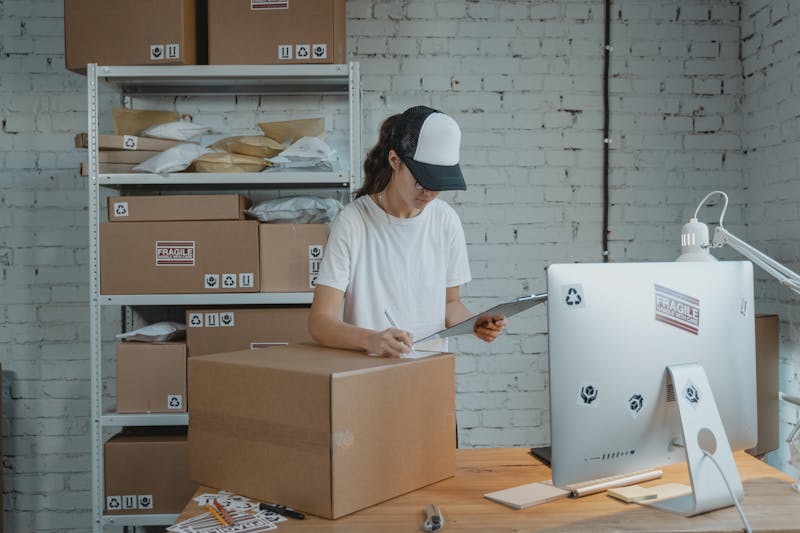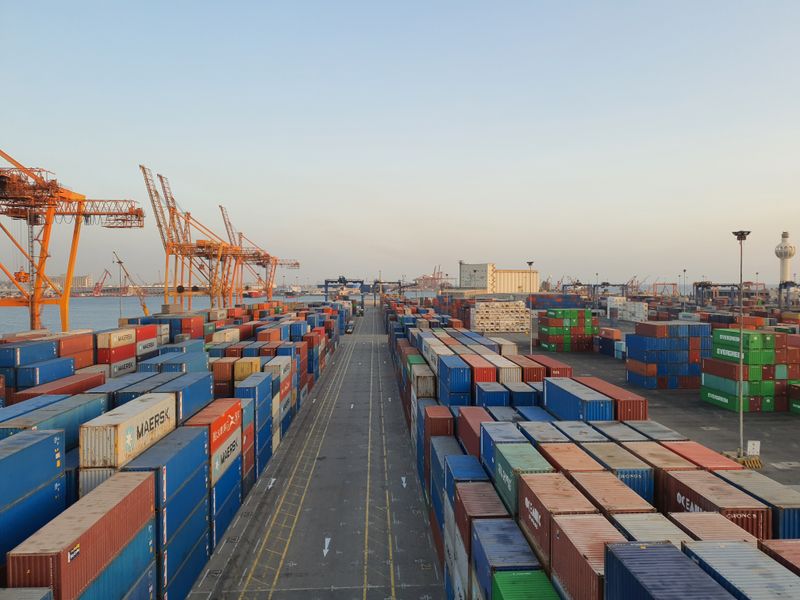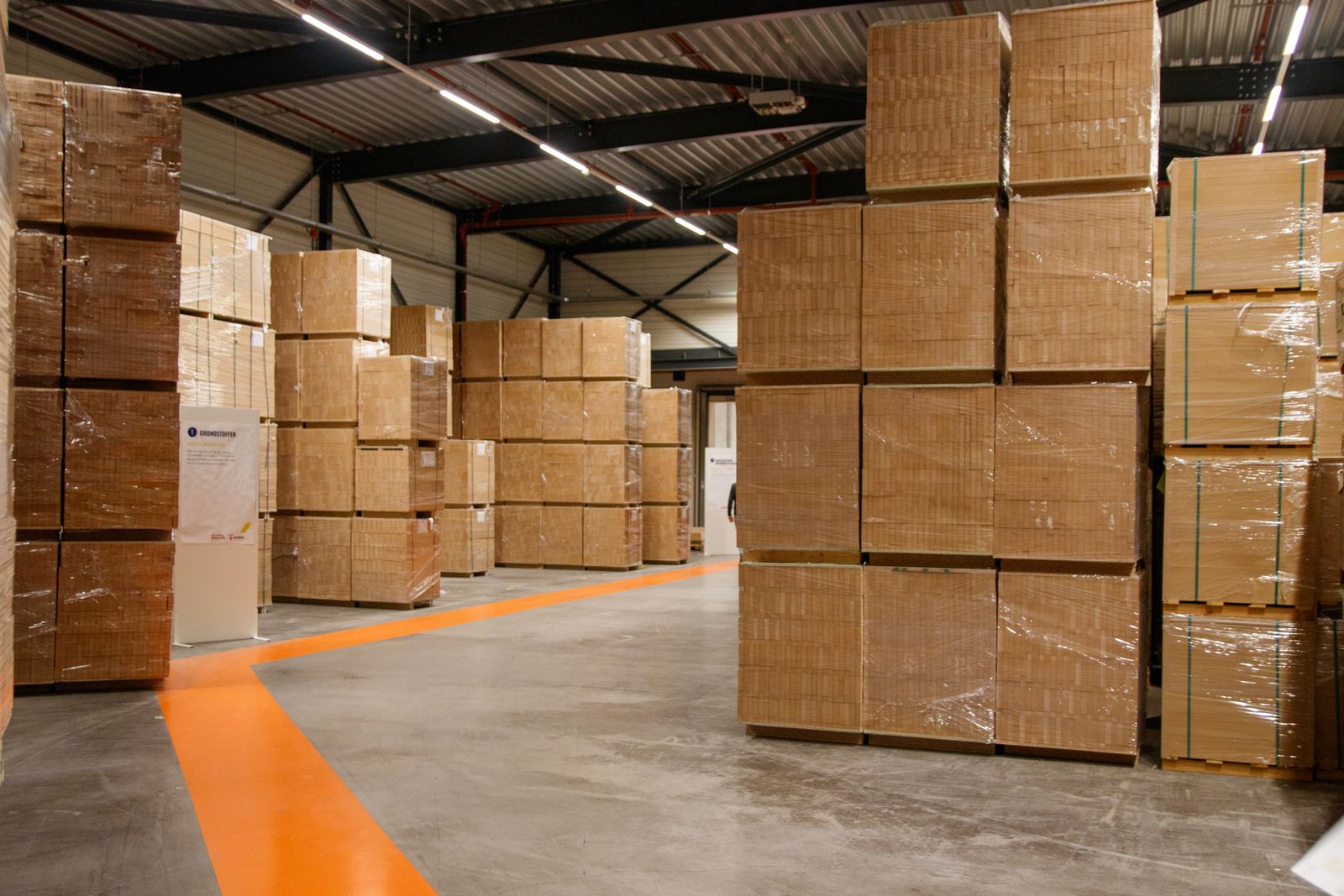
At $4.50 a week, one pallet of stock costs about $19.50 a month to store, and that's usually the smallest line on a 3PL invoice. 3PL warehousing costs in Australia in 2026 run about $3 to $7 per pallet per week for storage, $14 to $50 per pallet to receive stock, and $2 to $4 per order to pick and pack. A business shipping around 1,000 online orders a month can expect several thousand dollars in total, so the decision to outsource rests on comparing that full bill with the space, staff and time you'd otherwise need.
3PL fees at a glance
| Fee | Typical 2026 range (ex GST) | Billed |
|---|---|---|
| Pallet storage, NSW | $3 to $7 per pallet per week | Weekly or monthly |
| Pallet storage, VIC | $3 to $4.25 per pallet per week | Weekly or monthly |
| Pallet storage, QLD | $3.15 to $5 per pallet per week | Weekly or monthly |
| Pallet storage, SA | $3 to $5 per pallet per week | Weekly or monthly |
| Cubic metre storage | $0.79 to $0.89 per cubic metre per day (one rate card) | Daily |
| Inbound receiving | $14 to $50 per pallet | Per delivery |
| Pick and pack | $2 to $4 per order, plus $0.40 to $1.50 per extra item | Per order |
| Returns processing | $3 to $8 per item | Per return |
| Setup and integration | $0 to $25,000; most standard integrations $2,500 to $5,000 | Once |
Storage: per pallet, per cubic metre or per bin
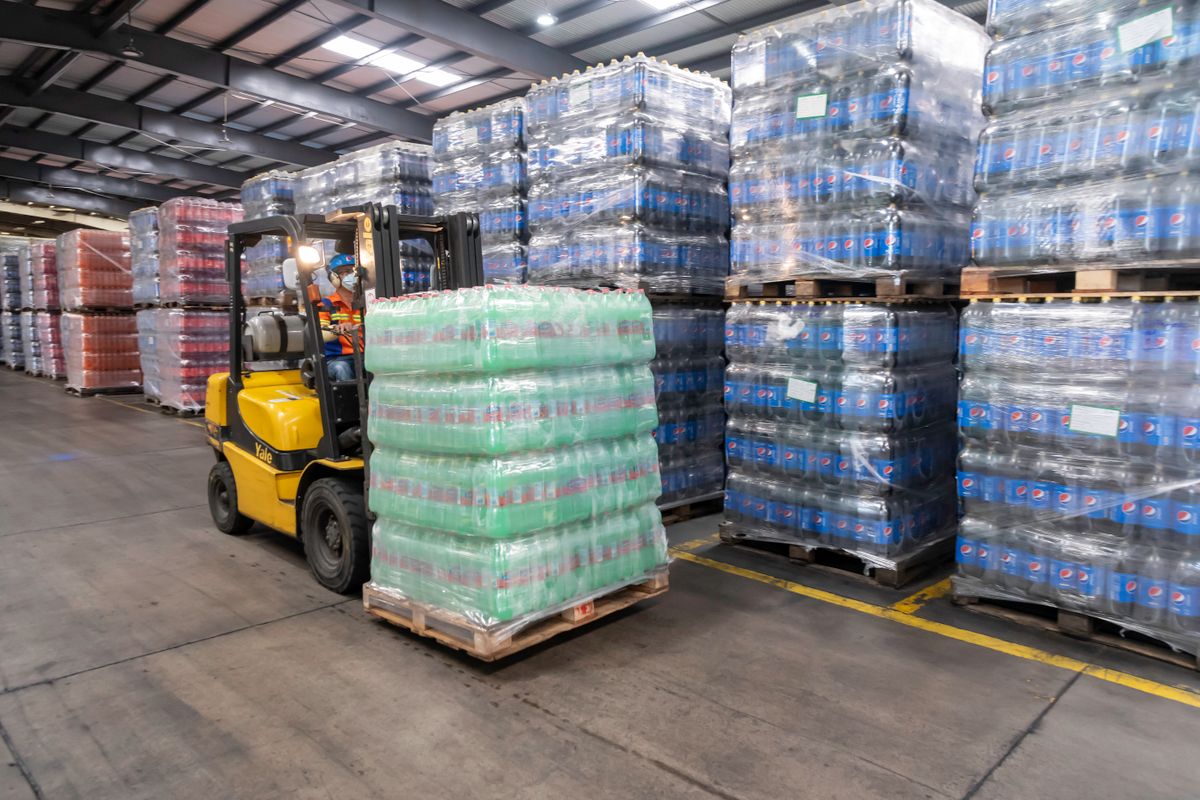
Most 3PLs bill storage by the pallet space, usually a standard Australian pallet of 1,165 mm by 1,165 mm stacked to an agreed height. You pay for the space, not what's on it. A half-empty pallet of slow stock costs the same as a full one.
Smaller e-commerce brands with many small items are often charged by cubic metre, shelf bin or carton location instead. That suits a business with 300 SKUs that would never fill 300 pallets.
Why Sydney costs more
Location is the first driver of price. Industrial areas close to the city, such as Alexandria, cost more than outer areas like Eastern Creek. A 3.2% industrial and logistics vacancy rate in the first half of 2026 means providers have little reason to discount, especially in Sydney's west and Melbourne's south east.
The trade-off is freight. A warehouse nearer your customers can cut delivery costs and times. For a national e-commerce brand, Melbourne or Sydney placement matters less than carrier rates out of that location.
Published rate cards
A handful of providers publish their prices, which makes a useful sense check against quotes. Sydney operator Birch3PL lists its rates online, and so does Golden 3PL in Melbourne. Published cards in 2026 show pallet storage around $4.50 a week in Sydney and $5 a week in Melbourne, with pick and pack in Sydney quoted at about $3 per order plus $0.50 per extra item. Use them as a yardstick, not a promise, since your products and volumes change the price.
Converting weekly rates
Pallet rates are often quoted weekly while your budget runs monthly. Multiply the weekly rate by 52 and divide by 12. At $4.50 a week, one pallet averages $19.50 a month; 40 pallets come to $780 a month before any handling.
Receiving and inbound handling
Every delivery into the warehouse has to be counted, checked against the advance shipping notice, labelled and put away. Benchmarks put receiving at $14 to $50 per pallet. Loose cartons straight off a container are dearer, because staff hand-unload and palletise them first.
Container unloads are often priced separately. A 20ft or 40ft container of floor-loaded cartons can take a team several hours, which shows up as a flat devanning fee or an hourly labour charge. If you control the supplier, ask for palletised loading to cut this cost.
Pick, pack and dispatch
For online retailers this is the fee that grows fastest. A typical structure is a base charge per order plus a smaller charge for each additional item. NP Fulfilment's 2026 breakdown puts it at $2 to $3 per order plus $0.40 to $1 per extra item; wider benchmarks run up to $4 per order and $1.50 per item.
Packaging is usually extra. Satchels, boxes, void fill, branded tape and inserts are either charged at cost plus margin or bundled into a per-order fee. Branded unboxing experiences, gift notes and kitting, where several items are assembled into a bundle, carry value-added service fees.
Outbound freight
Most 3PLs resell courier and parcel services at negotiated rates. That can be cheaper than your own account at low volumes. At higher volumes, compare their rates with your own, and check for fuel levies, residential surcharges and oversize fees.
Hidden and minimum fees
The headline rate rarely tells the full story. Ask every provider whether any of these apply:
- monthly minimum spend or account management fee
- software or portal access fees
- integration fees for Shopify, WooCommerce, Amazon or other channels
- long-term storage penalties for stock that hasn't moved in 6 or 12 months
- peak season surcharges, usually November to January
- stocktake fees, often per hour or per pallet
- returns processing at $3 to $8 per item
- relabelling, quality checks and photo requests
- termination and stock removal fees
According to NP Fulfilment, some 3PLs charge extra for returns, peak season or even for accessing their software. Get these in writing with the base rates.
A worked monthly invoice
Here's an illustrative month for a Melbourne online homewares brand: 30 pallets in storage, one 20ft container received as 18 pallets, 1,000 orders averaging 1.6 items, and 40 returns. These are example rates taken from the 2026 benchmarks above, not a quote.
| Line | Working | Monthly cost (ex GST) |
|---|---|---|
| Pallet storage | 30 pallets x $4 a week x 52 / 12 | $520 |
| Receiving | 18 pallets x $25 | $450 |
| Pick and pack, base | 1,000 orders x $2.75 | $2,750 |
| Extra items | 600 items x $0.75 | $450 |
| Packaging | 1,000 x $0.90 | $900 |
| Returns processing | 40 x $5 | $200 |
| Account and software fee | Flat | $150 |
| Subtotal before freight | $5,420 | |
| Outbound parcel freight | 1,000 x $9.50 average | $9,500 |
| Total | $14,920 |
Storage is under 4% of this invoice. Pick, pack, packaging and freight make up most of the cost, which is why negotiating per-order and freight rates matters more than shaving cents off pallet storage. NP Fulfilment cites industry data that businesses processing around 1,000 orders a month typically pay $7,000 to $8,500 for 3PL services; differences in freight inclusions explain the gap with this example.
When does outsourcing make sense?
Signs you've outgrown doing it yourself
- Stock is spilling out of your home, garage or self-storage unit
- You or your staff spend more than a day or two a week picking and packing
- Orders are going out late or with errors at busy times
- You're about to sign a warehouse lease you'd only half use
- You want to sell on more channels or offer same-day dispatch
Comparing with self-storage and your own warehouse
Self-storage is billed by floor area at a flat monthly rate. Published Melbourne rates in June 2026 ran about $183 to $548 a month for an 8 to 10 square metre unit. That suits slow-moving stock you pack yourself. It doesn't include any labour.
Leasing your own warehouse means rent, outgoings, racking, a forklift, insurance, staff and software. NP Fulfilment notes that 3PL costs for about 1,000 orders a month are less than half the cost of running your own 400 square metre warehouse. Your own site starts to make sense when volumes are steady and high enough to keep a team busy all year.
| Option | Best for | Main costs |
|---|---|---|
| Home or garage | Under a few hundred orders a month | Your time |
| Self-storage unit | Slow-selling stock, few orders | Flat rent, your time |
| 3PL | Growing brands, variable volumes, multiple channels | Per-pallet and per-order fees |
| Own warehouse | High, steady volumes | Lease, staff, equipment, systems |
Stock that costs more to store
Standard dry goods on standard pallets get the standard rate. Several kinds of stock attract a premium, and some 3PLs won't take them at all.
| Stock type | Why it costs more | What to ask |
|---|---|---|
| Dangerous goods (aerosols, lithium batteries, some cleaning chemicals) | Needs segregated, licensed storage and trained staff | Is the site licensed for my DG classes and quantities? |
| Temperature-controlled goods | Refrigeration, power and monitoring | What temperature range and alarm monitoring do you offer? |
| Oversize or overweight pallets | Takes more than one rack position | How do you charge for non-standard pallets? |
| High-value items | Extra security and cage storage | Is there a secure cage, and who insures it? |
| Food and supplements | Hygiene, pest control and batch tracking | Do you track batch and expiry dates? |
Climate-controlled space typically costs 35% to 50% more than standard storage, according to a recent Australian storage guide cited by Couriers and Freight. Check whether your stock genuinely needs it. Many cosmetics and supplements are fine in a standard warehouse with good ventilation, while chocolate in a Brisbane summer is not.
Safety and liability
A 3PL runs forklifts, racking and loading docks, and work health and safety duties sit with them as the operator. That still matters to you. A provider with poor racking inspections or untrained forklift drivers is more likely to damage your stock. Ask about their safety record, racking inspections and how often stock is damaged in handling.
Choosing a 3PL: what to ask
- What's included in each rate, and which rates exclude GST?
- What are your receiving cut-off times and same-day dispatch cut-offs?
- What's your pick accuracy and how do you handle errors?
- Which platforms do you integrate with, and is there a fee?
- How do you charge for container unloads and loose cartons?
- What are the minimums, peak surcharges and long-term storage penalties?
- Can I visit the warehouse and see how my stock will be stored?
- What's the notice period, and how is stock released if I leave?
Importers bringing in containers should also ask whether the provider handles wharf cartage. Combining the container run, unpacking and storage with one operator cuts hand-offs and detention risk. In Melbourne, General Carrying's 3PL warehousing is an example of a provider that links container cartage with storage and distribution.
Contract terms that matter
Look at the term, the notice period, liability limits for lost or damaged stock, insurance (whose policy covers the goods), and how rate rises are handled. Annual rate reviews are common, so ask for a cap or a fixed rate for the first year.
How to keep 3PL costs down
- Ask suppliers to palletise and label cartons to the 3PL's specification.
- Clear slow and dead stock before it attracts long-term storage fees.
- Consolidate part pallets regularly.
- Choose packaging that fits common orders to avoid oversize parcel charges.
- Forecast peak season early so the 3PL can staff for it without surcharges.
- Review the invoice monthly against your order and receiving data.
What to do next
Budget for the full 3PL invoice, not the pallet rate. Storage is usually the smallest line; pick and pack, packaging and freight drive the cost. Outsource when packing is eating your week or space is running out, compare at least three written quotes on a realistic month of activity, and negotiate per-order and freight rates first.
Sources
- Couriers and Freight, "How Much Does Warehouse Storage Cost in Australia?", 28 September 2026, accessed 18 November 2026, https://www.couriersandfreight.com.au/blog/how-much-does-warehouse-storage-cost-in-australia
- NP Fulfilment, "3PL Pricing in Australia: Complete Cost Breakdown 2026", 24 March 2026, accessed 18 November 2026, https://npfulfilment.com/blog/3pl-pricing-in-australia-complete-cost-breakdown-2026/
- Birch3PL, "Pricing", accessed 18 November 2026, https://birch3pl.com/Pricing/
- Golden 3PL, "Warehousing Prices", accessed 18 November 2026, https://3pl.goldenlogistics.com.au/warehousing-prices/
- MCS Logistics Group, "How Much Does 3PL Warehousing Cost in Sydney?", accessed 18 November 2026, https://mcs.sydney/how-much-does-3pl-warehousing-cost-in-sydney/
- Safe Work Australia, "Chemicals", accessed 18 November 2026, https://www.safeworkaustralia.gov.au/safety-topic/hazards/chemicals
- Australian Taxation Office, "GST", accessed 18 November 2026, https://www.ato.gov.au/businesses-and-organisations/gst-excise-and-indirect-taxes/gst
FAQ
How much does pallet storage cost in Australia?
Published 2026 benchmarks put 3PL pallet storage at about $3 to $7 per pallet per week depending on the state, or roughly $13 to $30 per pallet per month. Sydney sits at the top of the range and Victoria and South Australia lower.
What fees does a 3PL charge besides storage?
Expect receiving or inbound handling per pallet or carton, pick and pack per order and per item, packaging, outbound freight, returns processing, and sometimes setup, software, account management, minimum monthly or peak season fees.
When should a business outsource to a 3PL?
Common triggers are running out of space at home or in a small unit, spending more than a day or two a week packing orders, needing faster or more reliable dispatch, or facing a lease for a warehouse you would only half fill.
Is a half-full pallet charged as a full pallet?
Usually yes. Pallet storage is billed per pallet space, so a half-empty pallet often costs the same as a full one. Consolidating slow stock onto fewer pallets cuts the bill.
Do 3PLs charge GST?
Yes, 3PL services are taxable supplies. Many rate cards are quoted excluding GST, so add 10% when comparing, and claim it back if you are GST registered.
About VLD Business Desk
VLD Business Desk is the VLD editorial byline for business and small business writers. Articles are researched from official and primary sources, which are listed at the end of each piece.