
A cafe owner with three casual baristas carries the same core safety duty as a mining company with 3,000 staff. That is how WHS obligations for small business work in Australia: the law scales the steps to the size and risk of the business, but it never switches off.
Who the laws apply to
The model Work Health and Safety Act has been adopted by the Commonwealth, NSW, Queensland, WA, SA, Tasmania, the ACT and the NT, according to Safe Work Australia. Victoria uses its own Occupational Health and Safety Act 2004 with broadly similar duties, so a business with sites in Melbourne and Sydney has to work under two sets of rules that share most of their structure but differ in wording and detail.
Under the duties of a PCBU, the law places the main duty on a person conducting a business or undertaking, or PCBU. That covers sole traders, partnerships, companies and many not for profits. The people you owe the duty to are wider than your payroll:
- Employees, full time, part time and casual
- Contractors and subcontractors and their staff
- Labour hire workers placed with you
- Apprentices, trainees and work experience students
- Volunteers
- Customers and visitors who could be affected by your work
Your core duties at a glance
| Duty | What it means for a small business | Where it comes from |
|---|---|---|
| Primary duty of care | Keep workers and others safe so far as is reasonably practicable | Model WHS Act s 19 |
| Officer due diligence | Directors and managers keep up to date on WHS and check controls work | Model WHS Act s 27 |
| Consultation | Talk to workers about hazards and changes that affect them | Model WHS Act s 47 |
| Incident notification | Notify the regulator immediately of notifiable incidents and preserve the site | Model WHS Act ss 38 and 39 |
| Risk management | Identify hazards, control risks, review controls, including psychosocial risks | Model WHS Regulations |
| First aid | Provide first aid equipment, facilities and trained people suited to your risks | Model WHS Regulations and code of practice |
| Workers' compensation | Hold a policy covering your employees | State and territory laws |

How to manage risks in four steps
The model regulations and the business.gov.au WHS guide both describe the same basic cycle: identify hazards, assess the risks, control them, and review the controls. Nothing about it needs special software. A spreadsheet or a notebook works fine for a team of five.
Step 1: Find your hazards
Start with a walk through the workplace and a conversation with the people who do the work. They know where the near misses happen. Write down every hazard you find, even ones that seem obvious.
Common hazards in small businesses include:
- Manual handling, such as lifting kegs, stock or patients
- Slips and trips on wet floors, cords and cluttered aisles
- Sharp tools, hot surfaces and fryers in hospitality kitchens
- Vehicles and forklifts in yards and warehouses
- Working at heights on ladders, roofs and mezzanines
- Electrical equipment and extension leads
- Hazardous chemicals, from cleaning products to solvents
- Psychosocial hazards, such as aggressive customers, bullying, long hours and working alone
Step 2: Assess and control the risks
For each hazard, ask how likely harm is and how bad it could be. Then pick controls using the hierarchy of control, starting at the top.
- Eliminate the hazard, such as removing a step that people trip on.
- Substitute something safer, such as a lighter product or a less toxic cleaner.
- Isolate people from the hazard, such as a guard on a slicer.
- Use engineering controls, such as a trolley or lifting aid.
- Use administrative controls, such as rosters, procedures and training.
- Use personal protective equipment, such as gloves, eye protection or hearing protection.
The lower levels rely on people getting it right every time, so they should back up, not replace, the higher controls. A two person lift rule on a loading dock is weaker than a trolley that removes most of the lifting altogether.
Step 3: Decide what is reasonably practicable
The test weighs the likelihood and severity of the harm, what you know or should know about it, the controls available, and finally the cost. Cost can only justify not using a control if it is grossly disproportionate to the risk, so "we cannot afford it" rarely works as an excuse for a serious hazard.
Step 4: Review the controls
Controls drift. Guards get removed, procedures get skipped when the shop is busy, and new equipment brings new hazards. Review your controls after any incident or near miss, when you change equipment, premises or the way work is done, when a worker raises a concern, and at least once a year. Note the date and what you checked in your hazard register.
Managing psychosocial risks
Since the model regulations were amended to cover psychosocial hazards, businesses must identify, assess and control risks to mental health in the same way as physical ones. The model WHS Regulations at regulations 55A to 55D set out the duty, and Safe Work Australia's model code of practice on managing psychosocial hazards gives practical guidance. SafeWork NSW also publishes a short guide, Preventing psychological harm: first steps for small business, written for owners without an HR team.
The numbers explain why regulators care. Mental health conditions made up 12.0% of serious workers' compensation claims in 2023-24, about 17,600 claims, and finalised claims from 2022-23 had a median of 35.7 working weeks lost, according to Safe Work Australia's Key WHS Statistics 2025. That is far longer than for most physical injuries.
For a small business, practical controls include clear roles, realistic workloads, a policy on customer aggression, a way to report bullying that does not go through the person complained about, and access to support. An employee assistance program or a referral pathway to a mental health clinic, such as AwareHub in Sydney, gives staff somewhere to turn before a problem becomes a claim.

Consult, train and prepare for emergencies
Consultation is a legal duty, not a courtesy. You must consult workers when identifying hazards, deciding on controls, proposing changes that affect safety, and choosing facilities such as amenities and first aid. In a small team this can be a standing item at the weekly meeting, with notes kept.
Induct every new worker before they start, including casuals and labour hire staff. Cover emergency exits, first aid, how to report hazards, the specific risks of their role and who to ask. Record the induction with a signature and date.
First aid and emergency plans
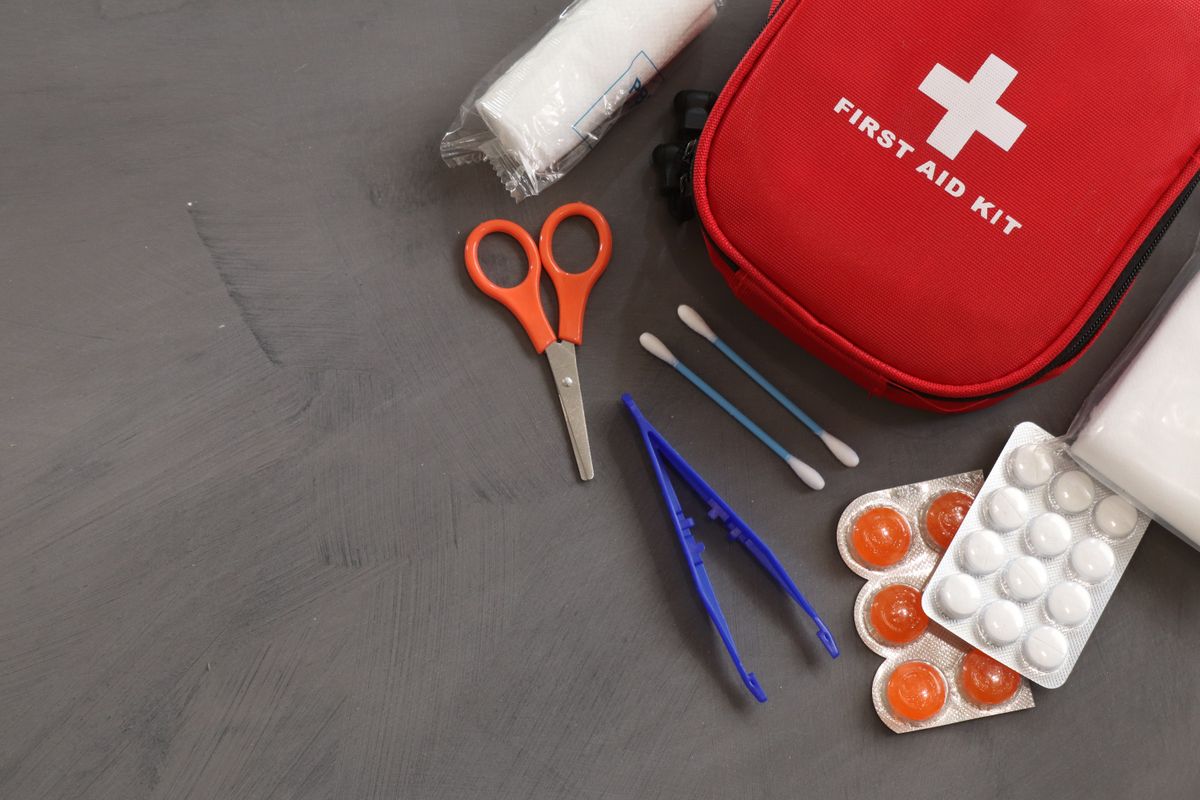
Provide first aid kits suited to your risks, enough trained first aiders for your size and location, and an emergency plan that covers fire, evacuation and medical emergencies. A remote landscaping crew needs a different set up from a city office.
Notifiable incidents
Under the model WHS Act notification rules, you must notify your regulator immediately, by the fastest means available, if a death, serious injury or illness, or a dangerous incident occurs, and preserve the site until an inspector says otherwise, except to help an injured person or make the area safe. Serious injury or illness includes anything that would ordinarily need immediate treatment as a hospital inpatient, and immediate treatment for injuries such as amputation, serious burns, serious eye injuries, spinal injuries, serious fractures and serious lacerations. A dangerous incident covers events like an uncontrolled gas leak, a fire or explosion, or the collapse of a structure, even when nobody is hurt. Keep a record of each notifiable incident for at least five years.
Do you need workers' compensation insurance?
Yes. Employers in every state and territory must hold workers' compensation insurance for their employees, according to the Fair Work Ombudsman. It is run through state and territory schemes, so the insurer, premium rules and any small payroll exemptions depend on where your workers are based. A policy covers wages and medical costs for workers injured at work. It does not replace your WHS duties, and a regulator can still prosecute a business that is fully insured.
Check whether contractors you engage count as workers under your state's compensation law. The definition is not the same as under WHS law or tax law, and getting it wrong can leave you uninsured for a claim.
What are the penalties?
Penalties under the model laws are indexed every year. The figures below apply from 1 July 2026 in the model Act, and each state sets its own amounts in its version.
| Offence | Individual PCBU or officer | Body corporate |
|---|---|---|
| Category 1: reckless or grossly negligent conduct risking death or serious injury | $2,464,000 | $12,321,000 |
| Category 2: failing a duty and exposing someone to risk of death or serious injury | $494,000 | $2,470,000 |
| Category 3: failing a duty | $165,000 | $827,000 |
| Industrial manslaughter (where adopted) | 20 years' imprisonment | $21,274,000 |
Most jurisdictions have now added an industrial manslaughter offence to their laws. Regulators also issue improvement notices, prohibition notices and on the spot fines for less serious breaches.
Regulators by state
| State or territory | Regulator | Law |
|---|---|---|
| NSW | SafeWork NSW | Work Health and Safety Act 2011 (NSW) |
| VIC | WorkSafe Victoria | Occupational Health and Safety Act 2004 |
| QLD | WorkSafe Queensland (WHSQ) | Work Health and Safety Act 2011 (Qld) |
| WA | WorkSafe WA | Work Health and Safety Act 2020 (WA) |
| SA | SafeWork SA | Work Health and Safety Act 2012 (SA) |
| TAS | WorkSafe Tasmania | Work Health and Safety Act 2012 (Tas) |
| ACT | WorkSafe ACT | Work Health and Safety Act 2011 (ACT) |
| NT | NT WorkSafe | Work Health and Safety (National Uniform Legislation) Act 2011 |
Most regulators run free small business advisory visits, templates and phone lines, and SafeWork NSW and WorkSafe Victoria both publish small business safety kits. Using them costs nothing and gives you a documented starting point.
Putting it into practice
A worked example: a small cafe
Take a hypothetical cafe with an owner, a chef and four casual staff. A first hazard walk might list hot oil and burns, knife cuts, wet floors behind the counter, lifting milk crates from deliveries, late night closing alone, and the occasional abusive customer. Controls could include a non slip mat and a mop at the coffee station, a fryer with a lid and a rule that only trained staff drain oil, a delivery bench at waist height, a two person close on late shifts, and a short written policy that staff can refuse service and call the manager or police when a customer becomes aggressive.
The owner would consult staff at the next team meeting, record the hazards and controls in a one page register, check the first aid kit, and confirm the workers' compensation policy covers all six workers. None of this requires a consultant, though the owner may need trained first aiders and a fire extinguisher check.
A one page routine for busy owners
- Daily: quick look for spills, blocked exits and damaged equipment
- Weekly: five minute safety item at the team meeting, with notes
- Monthly: check first aid kits, fire extinguisher tags and the hazard register
- Each new starter: induction before their first shift, signed and dated
- After any incident or near miss: record it, investigate, fix the cause
- Yearly: review the risk register, renew training, check your workers' compensation policy
Where to start
Your WHS duties start with your first worker, whether they are an employee, a contractor or a volunteer. Walk the workplace with your team, write down the hazards, fix the worst ones using the hierarchy of control, and treat stress, bullying and customer aggression as seriously as wet floors. Keep short records of what you did, because if something goes wrong, those notes are your best evidence that you took reasonable care.
Sources
- Safe Work Australia, "Maximum monetary penalties under the WHS laws", accessed 18 November 2026, https://www.safeworkaustralia.gov.au/law-and-regulation/legislation/maximum-monetary-penalties-under-whs-laws
- Safe Work Australia, "Key Work Health and Safety Statistics Australia 2025", accessed 18 November 2026, https://data.safeworkaustralia.gov.au/reports/key-whs-statistics-australia/2025
- Safe Work Australia, "Duties of a PCBU", accessed 18 November 2026, https://www.safeworkaustralia.gov.au/law-and-regulation/duties-under-whs-laws/duties-pcbu
- Safe Work Australia, "Incident notification requirements under the model WHS Act", accessed 18 November 2026, https://www.safeworkaustralia.gov.au/safety-topic/managing-health-and-safety/incident-notification/incident-notification-requirements-under-model-whs-act
- Safe Work Australia, "Model Code of Practice: Managing psychosocial hazards at work", accessed 18 November 2026, https://www.safeworkaustralia.gov.au/doc/model-code-practice-managing-psychosocial-hazards-work
- SafeWork NSW, "Preventing psychological harm: first steps for small business", accessed 18 November 2026, https://www.safework.nsw.gov.au/resource-library/psychosocial/preventing-psychological-harm-first-steps-for-small-business
- WorkSafe Victoria, "Occupational Health and Safety Act and Regulations", accessed 18 November 2026, https://www.worksafe.vic.gov.au/occupational-health-and-safety-act-and-regulations
- business.gov.au, "Work health and safety", accessed 18 November 2026, https://business.gov.au/risk-management/health-and-safety/work-health-and-safety
- Fair Work Ombudsman, "Workers compensation", accessed 18 November 2026, https://www.fairwork.gov.au/employment-conditions/workers-compensation
FAQ
Do WHS laws apply to a business with only one or two employees?
Yes. The duties apply to any person conducting a business or undertaking, regardless of size, and they extend to contractors, labour hire workers, apprentices and volunteers as well as employees.
Do I need a written WHS policy?
The model laws do not require a single written policy for every business, but you must manage risks, consult workers and keep certain records. A short written policy and risk register is the simplest way to show you have done this.
What is reasonably practicable?
It means doing what is reasonably able to be done, weighing the likelihood and severity of harm, what you know about the risk and ways to control it, and then the cost. Cost can only rule out a control if it is grossly disproportionate to the risk.
Is workers' compensation insurance compulsory?
Yes, for employers in every state and territory, with some exemptions for very small payrolls in certain states. It is arranged through your state scheme or an approved insurer, separately from your WHS duties.
Who do I report a serious injury to?
Your state or territory WHS regulator, such as SafeWork NSW, WorkSafe Victoria or WorkSafe Queensland. Call them immediately for a death, serious injury or dangerous incident, and follow up in writing if asked.
About VLD Business Desk
VLD Business Desk is the VLD editorial byline for business and small business writers. Articles are researched from official and primary sources, which are listed at the end of each piece.


